
I’ve cleaned hundreds of kitchen cabinets for clients and in my own remodels, from vintage oak to modern painted Shaker doors. Here’s the straight truth: how to clean kitchen cabinets well comes down to understanding the finish, using the right cleaners, and following a simple routine. In this guide, I’ll share proven, practical methods, the products that actually work, and the mistakes that cause damage. If you want cabinets that look new longer, you’re in the right place.
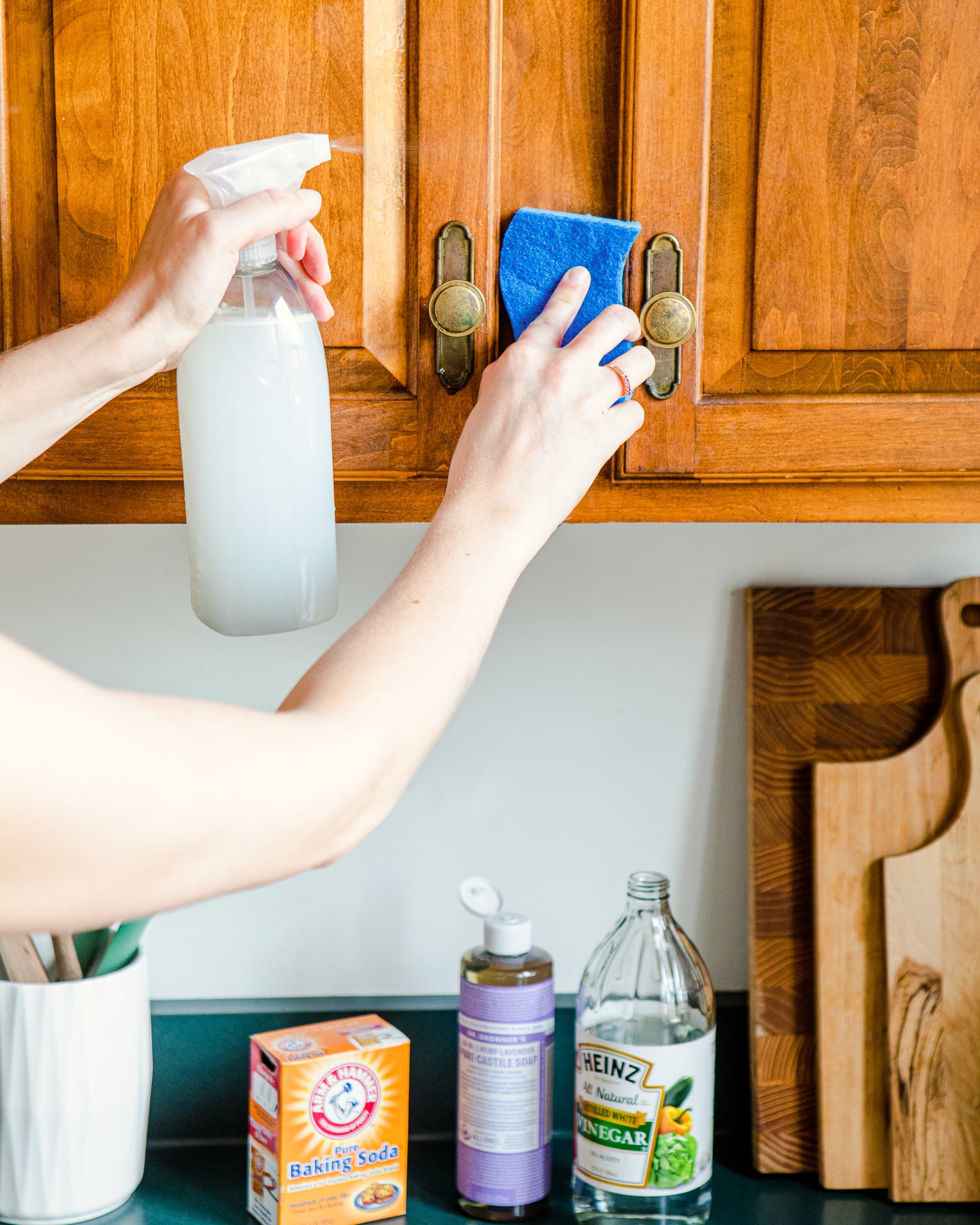
Source: www.thekitchn.com
What You’ll Need
Gather your toolkit so you can move efficiently and avoid damaging finishes.
- Soft microfiber cloths Use several: one for wet cleaning, one for rinsing, one for drying.
- Soft-bristle brush or old toothbrush For crevices and profiles.
- Mild dish soap A few drops go a long way.
- Warm water Lukewarm to warm, not hot.
- White vinegar Optional for laminate and glass; avoid on waxed or oiled wood.
- Baking soda For gentle paste on scuffs; use sparingly.
- Mineral spirits For sticky resin or old wax on sealed wood; spot test.
- Isopropyl alcohol 70% For disinfecting knobs; avoid painted areas.
- Food-safe degreaser Citrus-based or plant-derived; no caustic oven cleaners.
- Wood cleaner/conditioner For sealed wood; silicone-free, non-greasy formulas.
- Magic eraser Use lightly and only on durable painted or laminate surfaces; it’s abrasive.
- Step stool Stable, so you can reach crown molding safely.
- Nitrile gloves Protects skin; helps you feel residue while wiping.
Expert note: Industry testing and manufacturer care guides consistently recommend pH-neutral cleaners and immediate drying to protect topcoats.
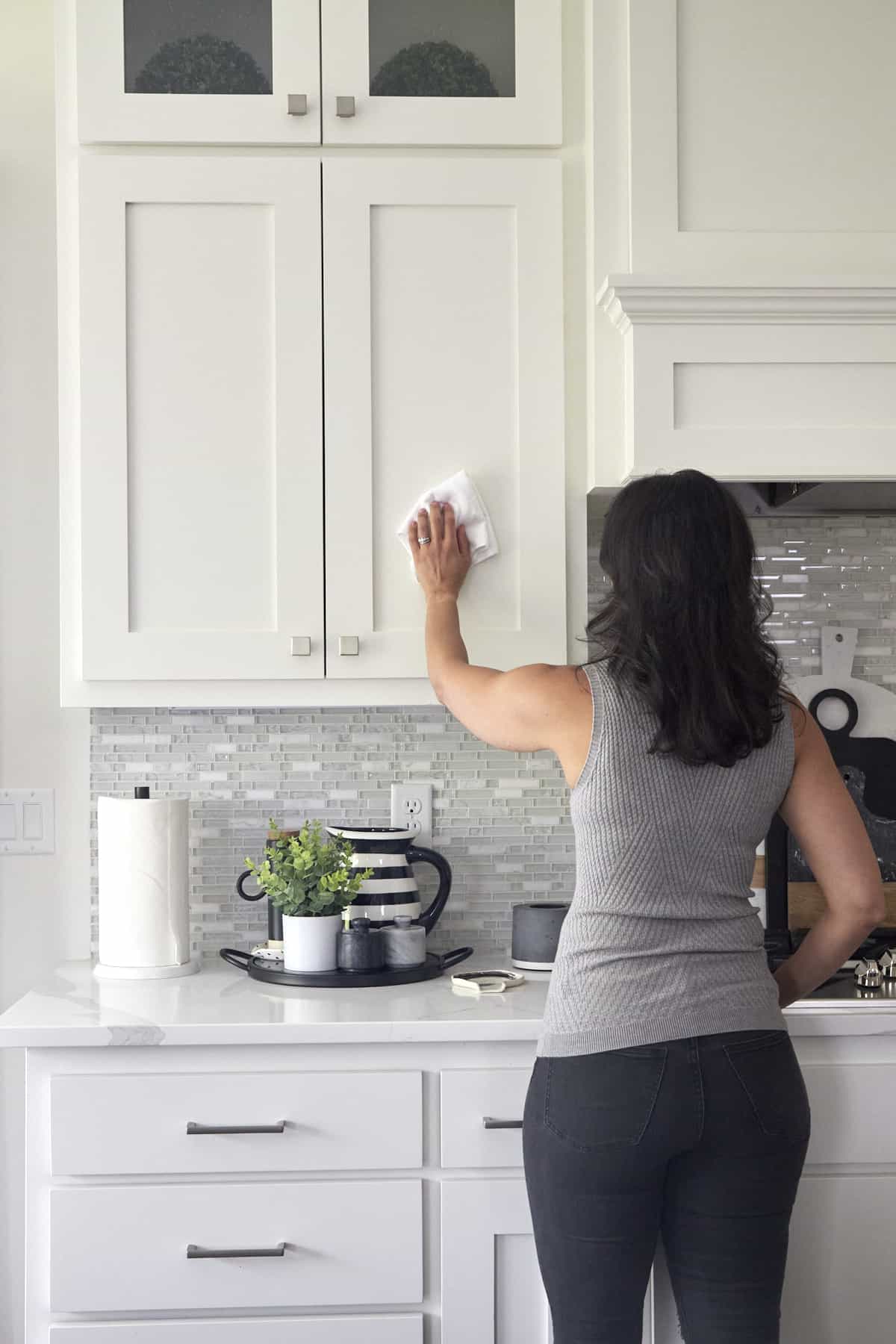
Source: www.fooddolls.com
Identify Your Cabinet Finish
Match the method to the material. If you don’t know your finish, start with the mildest approach and spot test inside a door.
- Painted cabinets Water-based or enamel topcoats. Clean with mild dish soap and water; avoid vinegar, ammonia, and abrasive pads.
- Stained wood with clear coat Polyurethane or conversion varnish. Use mild soap and water; add a wood-safe cleaner if needed. Avoid prolonged moisture.
- Natural or oiled wood Hardwax oil or penetrating oil. Use wood-specific soap; avoid vinegar and high water exposure. Re-oil if dull.
- Laminate or thermofoil Durable and non-porous. Safe with mild soap, vinegar solution, or gentle degreaser. Avoid high heat and edge moisture.
- Metal or powder-coated Easy to degrease. Use mild soap or vinegar mix; dry immediately to avoid spotting.
- Glass insets Clean glass with vinegar-water; avoid letting liquid seep into muntins or door frames.
Pro tip from the field: Thermofoil lifts if steam or water lingers at edges. Always wipe edges dry within minutes.
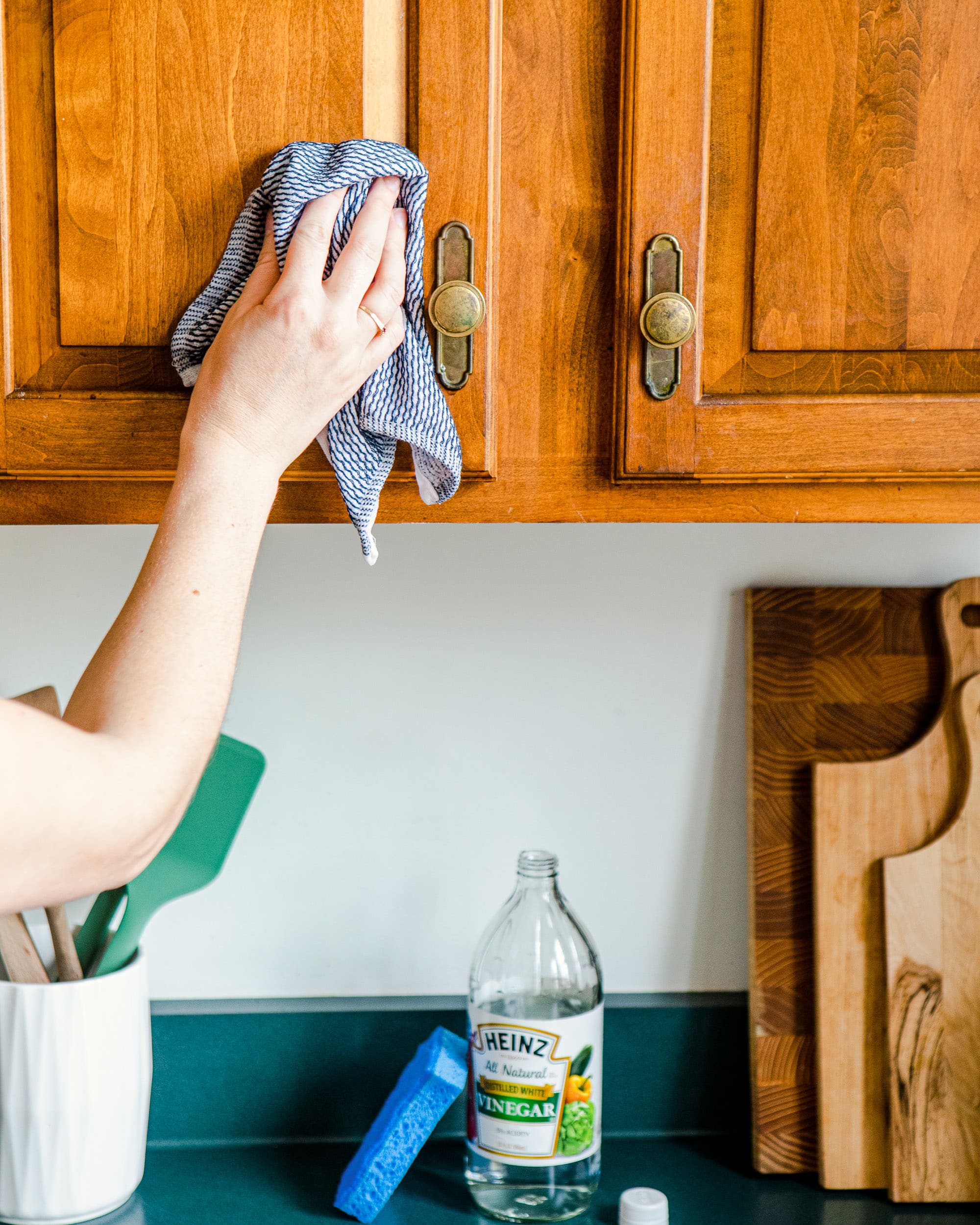
Source: www.thekitchn.com
Step-By-Step: Daily, Weekly, and Deep-Clean Routine
Daily quick clean
- Wipe high-touch spots Knobs, pulls, and the lower edges near handles with a damp microfiber and a drop of dish soap.
- Dry immediately Use a separate cloth to prevent water marks or swelling.
Weekly reset
- Dust doors and frames Use a dry microfiber cloth, top to bottom.
- Clean fronts and edges Mix 2–3 drops of dish soap in a quart of warm water. Wring cloth very well. Wipe with the grain on wood.
- Rinse Lightly wipe with a cloth dampened in clean water.
- Dry thoroughly Buff with a dry cloth to restore sheen and avoid streaks.
Monthly deep clean
- Degrease hotspots Focus on doors near the cooktop, hood, and microwave. Use a wood-safe or laminate-safe degreaser per label.
- Detail crevices Use a soft brush around profiles, hinge sides, and rail-stile joints.
- Clean interiors Empty one cabinet at a time. Vacuum crumbs, then wipe shelves with mild soap solution. Dry fully before restocking.
- Condition sealed wood Optional every 3–6 months with a silicone-free conditioner to maintain luster.
Personal tip: I schedule deep-clean by zones. One bank of cabinets per week keeps the job manageable and prevents marathon cleaning days.
:max_bytes(150000):strip_icc()/SPR-how-to-clean-wood-cabinets-7964253-HERO-42da7417e9694e078033a546becc4406.jpg)
Source: www.thespruce.com
Degreasing Stubborn Buildup Safely
Grease bonds with dust to form a sticky film, especially above ranges.
- Start gentle Warm soapy water. Dwell time matters: apply, wait 1–2 minutes, then wipe.
- Use a citrus-based degreaser For painted and laminate surfaces. Spot test; apply to cloth, not directly to the cabinet.
- For sealed wood Try a wood-specific cleaner first. For resinous spots, a tiny amount of mineral spirits on a cloth can help. Wipe, then follow with a mild soap wipe and dry.
- Break buildup gradually Two or three passes are safer than scrubbing hard once.
- Avoid harsh products No oven cleaner, no bleach, no strong ammonia. These can haze or strip finishes.
Reality check: Manufacturer guidance and finish testing indicate that strong alkalines cause irreversible dulling on catalyzed finishes. When in doubt, go milder and repeat.
Source: www.abbottsathome.com
Spot Treatments: Stains, Rings, Mold, And More
- Water rings on sealed wood Lightly warm with a hairdryer on low while wiping; moisture often lifts. Follow with a dry buff. If persistent, a tiny dot of non-abrasive toothpaste mixed with baking soda can help; wipe and dry.
- Scuffs on painted or laminate Use a damp cloth first. If needed, a magic eraser very lightly. Stop at the first sign of paint transfer to the sponge.
- Marker or dye On laminate, a small amount of rubbing alcohol on a cotton swab. Avoid painted or oiled wood with alcohol.
- Sap or adhesive residue Use mineral spirits sparingly on sealed wood; for laminate, use a gentle adhesive remover rated safe for plastics.
- Surface mold inside cabinets Mix 1 tablespoon of dish soap in 1 quart of warm water; wipe, rinse, and dry. Increase ventilation and address moisture source. For persistent growth on unfinished wood, consult a pro for appropriate remediation.
Lesson learned: The most common mistake I see is over-scrubbing a small spot and creating a shiny patch. Let cleaners do the work with time, not force.
:max_bytes(150000):strip_icc()/SPR-how-to-clean-wood-cabinets-7964253-02-3c59c87d40ee4bfe80e3e32a65a3d0b9.jpg)
Source: www.thespruce.com
Hardware, Hinges, And Drawer Slides Care
- Knobs and pulls Remove once or twice a year for a thorough clean. Soak in warm soapy water, scrub with a soft brush, rinse, dry completely. Avoid soaking natural stone or leather-wrapped pulls.
- Hinges Wipe exposed parts with a damp cloth. If squeaky, use a tiny drop of silicone-based lubricant applied with a cotton swab. Avoid overspray.
- Drawer slides Vacuum debris. Wipe accessible tracks with a barely damp cloth and dry. For soft-close slides, avoid oil-based lubricants that attract dust; use manufacturer-recommended products.
- Reinstall with care Hand-tighten screws to avoid stripping; check alignment to prevent door rubbing that damages finishes.
Pro tip: Place hardware screws in labeled cups per door to keep lengths matched—mixing screw lengths can cause dimples on thin door fronts.
Natural Cleaners vs. Commercial Products: What Works
Balanced approach for performance and finish safety.
- Dish soap Mild surfactants lift grease without stripping finishes; universally recommended for most cabinet types.
- Vinegar Effective on laminate, glass, and metal in a 1:4 vinegar-to-water mix. Avoid on oiled wood and be cautious on painted finishes to prevent dulling.
- Baking soda Gentle abrasion for marks; use as a thin paste and rinse well.
- Plant-based degreasers Citrus terpenes work on greasy films. Look for products labeled safe for wood finishes and painted surfaces.
- Wood-specific cleaners Designed to clean without softening topcoats. Prefer silicone-free options to avoid residue that attracts dust.
Evidence snapshot: Comparative product testing shows pH-neutral cleaners preserve gloss and hardness of finishes better over time than strong acids or alkalis.
Preventive Maintenance And Habits
- Use your range hood Every time you cook; run it 10 minutes after. Capturing airborne grease is half the battle.
- Wipe spills immediately Water and sauces can creep into seams and edges.
- Install door bumpers Soft bumpers prevent paint chips and noise.
- Avoid hanging wet towels on doors Trapped moisture swells edges and softens finishes.
- Rotate high-use zones Move the coffee station or handle rail occasionally to balance wear.
- Seasonal checkup Inspect caulk lines, swelling, and loose hardware; address early.
Anecdote: After moving my espresso setup away from a painted end panel, new grease spots dropped by 80%—sometimes micro-changes save macro-cleaning.
Safety, Materials To Avoid, And Common Mistakes
- Avoid these products Bleach sprays, oven cleaner, undiluted ammonia, powdered cleansers, steel wool, and abrasive pads.
- Mind the moisture Use a damp, not wet, cloth; standing water is the enemy of wood and thermofoil edges.
- Don’t skip the rinse Residual cleaner attracts dust and looks streaky.
- Test before you commit Spot test inside a door or on a kick plate.
- Ventilate while degreasing Keep the area airy and wear gloves, especially with solvents.
- Read manufacturer care guides Cabinet finish warranties often exclude damage from harsh cleaners.
Transparency note: Some finishes, especially older or sun-faded paint, can be fragile. If color transfers to your cloth, stop and consult a refinishing pro before proceeding.
Frequently Asked Questions
How do I clean greasy kitchen cabinets without damaging paint?
Use warm water with a few drops of dish soap and a microfiber cloth. Let the solution sit for 1–2 minutes, wipe gently, then rinse with a damp cloth and dry. For stubborn spots, use a paint-safe citrus degreaser applied to the cloth, not directly to the cabinet.
What is the best cleaner for wood cabinets?
A pH-neutral wood cleaner or mild dish soap in warm water works best. Avoid vinegar and strong alkalis on sealed wood, and keep moisture minimal. Dry immediately to protect the clear coat.
Can I use a magic eraser on cabinets?
Yes, but carefully. Magic erasers are micro-abrasive. Use very light pressure on durable painted or laminate surfaces and stop if you see color on the sponge. Do not use on oiled wood.
How often should I deep clean my kitchen cabinets?
Degrease high-use areas monthly, clean interiors quarterly, and condition sealed wood every 3–6 months. Do quick touch-ups weekly to prevent buildup.
How do I remove odors from cabinet interiors?
Empty the cabinet, wipe with mild soapy water, rinse, and dry thoroughly. Place an open box of baking soda or a bowl of activated charcoal inside for 24–48 hours. Improve ventilation and address moisture sources to prevent return.
Is vinegar safe for all cabinets?
No. Vinegar is fine for laminate, glass, and metal when diluted, but it can dull painted finishes and is not recommended for oiled wood. When unsure, stick with mild dish soap.
What should I do about peeling thermofoil?
Do not try to glue it back with household adhesives; it often worsens the issue. Minimize heat and steam exposure, and consult a professional for rewrapping or door replacement options.
Conclusion
Clean, well-kept cabinets don’t require harsh chemicals or marathon scrubbing—just the right method for your finish, a simple routine, and a few smart habits. Start with mild soap, control moisture, degrease hotspots monthly, and dry thoroughly every time. Your cabinets will look better, last longer, and feel like new.
Ready to put this into practice? Pick one cabinet bank today and try the weekly reset. Share your results or questions in the comments, and subscribe for more hands-on home care guides.
Watch This Video on how to clean kitchen cabinets