
I’ve spent years in professional kitchens and home test labs, and if there’s one technique that separates a rushed meal from a soulful dish, it’s simmering. So, what does simmer mean in cooking? Simmering is the gentle heat that coaxes flavor, builds body, and transforms tough cuts into tender bites without the aggressive bubbling of a full boil. In this guide, I’ll unpack what simmering really is, how to recognize it, why it matters, and how to master it with confidence at home.
:max_bytes(150000):strip_icc()/potato-leek-soup-recipe-1375808-step-05-2-5c38be7bc9e77c00013a1641.jpg)
Source: www.thespruceeats.com
What Is Simmering, Exactly?
Simmering is a moist-heat cooking technique where liquid is kept just below boiling point, allowing small, gentle bubbles to rise steadily to the surface. It’s used to cook foods evenly, extract flavor, and preserve texture without the agitation or evaporation rate of a rolling boil.
Why cooks rely on a simmer:
- It preserves tenderness by minimizing agitation that can toughen proteins.
- It builds clarity in stocks and broths by avoiding violent boiling that clouds liquids.
- It reduces sauces with control, concentrating flavors without scorching.
- It gives time for collagen in meats to convert to gelatin, creating silky textures in stews and braises.
Personal note: The first time I nailed a perfect chicken stock, I realized the “secret” wasn’t fancy ingredients—it was a calm, patient simmer that kept the broth clear and golden.

Source: en.wikipedia.org
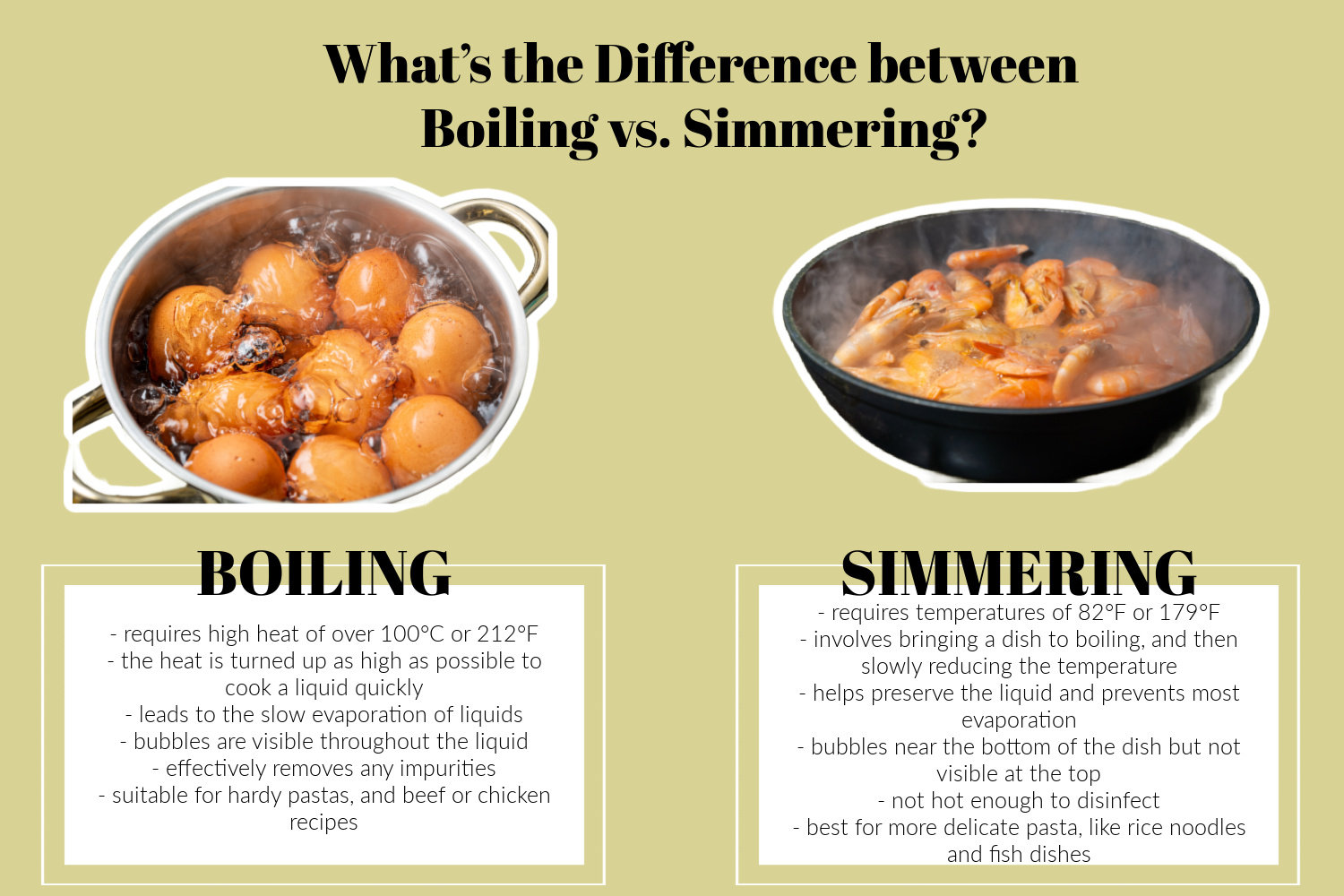
Simmer vs. Boil: What’s The Difference?
While both use water or liquid as a medium, their behavior and results are distinct.
-
Boil
- Temperature: About 212°F at sea level.
- Visual: Large, rolling bubbles vigorously break the surface.
- Best for: Pasta, blanching vegetables, sterilizing equipment.
- Trade-off: Agitation can break delicate foods and emulsions.
-
Simmer
- Temperature: Roughly 185–205°F, below a full boil.
- Visual: Small, steady bubbles; surface movement is gentle.
- Best for: Soups, stews, braises, poaching, sauces.
- Benefit: Flavor extraction and tenderizing without tearing food apart.
Pro insight: For braises, I bring liquid to a brief boil to heat it quickly, then lower to a steady simmer to cook through slowly. That sequence saves time while preserving texture.
Source: www.lemonsforlulu.com
Temperatures And Visual Cues You Can Trust
Exact numbers matter less than learning to read the pot. That said, temperature ranges are useful:
- Poach: 160–180°F, no bubbles or just a few lazy wisps.
- Low/“Bare” Simmer: 185–195°F, tiny bubbles occasionally break the surface.
- Active Simmer: 195–205°F, small bubbles consistently rise with gentle movement.
- Boil: 212°F at sea level, large, rolling bubbles.
Visual cues:
- Gentle puffs of steam with soft “blip” sounds.
- A few small bubbles around the pot’s edge for a bare simmer.
- Constant, restrained bubbling for an active simmer.
Altitude note: Water boils at lower temperatures at higher elevations. Visual cues become even more important if you live in the mountains.

Source: motherwouldknow.com
How To Simmer Step-By-Step
You don’t need a thermometer every time. Here’s a reliable process:
- Heat gradually
- Start over medium heat to bring the liquid close to boiling.
- Watch for signs
- When bubbles become frequent, reduce heat.
- Dial it in
- Lower to medium-low or low until bubbles are small and steady.
- Adjust as you go
- Use the lid partially ajar to control evaporation and temperature.
- Stir strategically
- Stir occasionally to prevent sticking; avoid vigorous stirring that breaks delicate ingredients.
- Taste and time
- Check seasoning and doneness regularly; simmering is about patience and control.
Anecdote: I once scorched a tomato sauce by walking away at “almost simmer.” It taught me to reduce heat just before the boil and to use a heavy-bottomed pot for even heat.
Common Dishes That Benefit From Simmering
- Stocks and broths for clarity, body, and clean flavor.
- Soups and stews like chicken noodle, chili, and beef bourguignon.
- Braises such as short ribs or coq au vin, where collagen becomes gelatin.
- Beans and legumes to keep skins intact and textures creamy.
- Tomato sauces and ragùs to reduce and develop depth.
- Grains like rice pilaf, farro, or barley cooked gently in stock.
- Poached proteins including eggs, fish, and chicken for tender results.
The Science Of Simmering: Why It Works
Simmering is the sweet spot where culinary chemistry shines:
- Collagen to gelatin: At gentle heat over time, collagen in connective tissue becomes gelatin, giving that luscious mouthfeel.
- Flavor extraction: Aromatic compounds dissolve and infuse into liquid without boiling off delicate notes.
- Emulsion stability: Sauces with fat components are less likely to break under controlled temperatures.
- Starch control: Slow hydration and gelatinization prevent mushiness and maintain structure.
Expert perspective: Culinary training emphasizes low-and-slow for texture and flavor integrity. Professional standards also warn that aggressive boiling can extract bitterness from aromatics and disrupt emulsions.
Troubleshooting: Mistakes To Avoid And Easy Fixes
Common mistakes:
- Boiling instead of simmering
- Result: Tough meat, cloudy stock, broken sauce.
- Fix: Lower heat, slide pot off burner for 1–2 minutes, then return to low.
- Thin, watery flavors
- Cause: Insufficient reduction time.
- Fix: Simmer uncovered to reduce; season at the end.
- Scorching and sticking
- Cause: Heat too high, thin pot, or minimal stirring.
- Fix: Use heavy-bottomed cookware; stir occasionally; add a splash of liquid.
- Overcooked vegetables
- Cause: High or uncontrolled heat.
- Fix: Add delicate veg later; keep to a bare simmer.
- Broken dairy sauces
- Cause: High heat curdles dairy.
- Fix: Add dairy at the end; keep at a low simmer or below.
Pro tip: If a stew reduces too much while simmering, add warm stock, not cold water. Warm liquid maintains temperature and prevents seizing.
Tools And Equipment That Make Simmering Easier
- Heavy-bottomed pots or Dutch ovens for even heating.
- Tight-fitting lids to manage evaporation and energy use.
- Heat-diffusing simmer plates if your burner runs hot.
- Instant-read or clip-on thermometers for learning the visual-temperature relationship.
- Induction or gas stoves with fine heat control.
Home cook hack: On electric coil ranges with less nuance, move the pot halfway off the burner to moderate a too-vigorous simmer.
Safety, Food Handling, And Timing
- Safe temperatures: Keep foods above 140°F if holding. When cooking, ensure final internal temperatures match food safety guidelines for meats and poultry.
- Cooling and storage: For big batches, cool quickly in shallow containers before refrigeration to prevent bacterial growth.
- Reheating: Bring soups and stews back to a simmer before serving to ensure even heating and safety.
- Salt smart: Reduce first, then salt. Reducing during a simmer concentrates salt and can overshoot your target.
Note on sources: The guidance above aligns with professional culinary training and widely accepted food safety recommendations from reputable institutions.
Frequently Asked Questions Of What Does Simmer Mean In Cooking
What Temperature Is A Simmer?
A simmer typically ranges from about 185–205°F. A bare simmer sits on the lower end with occasional small bubbles; an active simmer is closer to 205°F with steady, gentle bubbling.
How Do I Know If I’m Simmering Without A Thermometer?
Watch the surface. You should see small bubbles quietly rising and minimal splashing. If the pot looks calm but gently alive, you’re there; if it’s churning, you’re boiling.
Can I Simmer With The Lid On Or Off?
Both. Lid on keeps moisture and heat, ideal for braises. Lid off encourages reduction and concentration, perfect for sauces and some soups. Partially ajar is a flexible middle ground.
Why Did My Stock Turn Cloudy?
Likely it boiled. Vigorous bubbling emulsifies impurities into the liquid. Keep stocks at a bare simmer and avoid stirring too much to maintain clarity.
What’s The Difference Between Simmer And Poach?
Poaching is gentler, usually 160–180°F with almost no bubbling. Simmering is hotter, 185–205°F, with small, steady bubbles. Use poaching for delicate foods like fish and eggs.
How Long Should I Simmer A Stew?
Most stews benefit from 1.5–3 hours at a gentle simmer, depending on the cut of meat and size of pieces. Cook until the meat is fork-tender and flavors are cohesive.
Can I Simmer In The Oven?
Yes. Oven braising at 275–325°F creates an even, all-around heat that mimics a gentle stovetop simmer and is less prone to hot spots.
Conclusion
Simmering is the quiet craft that builds deep flavor, tender textures, and restaurant-level results at home. Mastering it means learning to read the pot, controlling heat with intention, and giving time for transformation. Start with a stock or a simple tomato sauce this week—find the gentle bubble, stay patient, and taste the difference. If you found this helpful, explore more technique guides, subscribe for updates, or drop your simmering questions in the comments below.
Watch This Video on what does simmer mean in cooking