

Installing kitchen cabinets is an important task in home improvement. Cabinets hold your kitchen items and give your kitchen a neat look. Knowing how to install them can save time and money. This guide explains the steps clearly and simply.
What You Need Before You Start
Before installation, gather all tools and materials. Here is a list to help you prepare:
- Kitchen cabinets (base and wall cabinets)
- Stud finder
- Drill and drill bits
- Screwdriver or screw gun
- Level
- Measuring tape
- Shims (small wedges)
- Long screws (cabinet screws, not drywall screws)
- Pencil
- Helper (optional but useful)
Step 1: Prepare the Kitchen Area
Clear the kitchen space. Remove old cabinets if needed. Make sure walls are clean and smooth. Check for any uneven spots on the wall. Uneven walls can cause problems later.
Step 2: Find Wall Studs
Wall studs are the wooden or metal supports inside walls. Cabinets must be attached to them for safety and strength. Use a stud finder to locate these studs.
Mark the stud positions on the wall with a pencil. This will guide you when you attach the cabinets.
Step 3: Start with the Base Cabinets
Base cabinets sit on the floor. They hold heavy kitchen items and appliances. Installing them first makes the process easier.
- Measure and Mark: Measure the space carefully. Mark the cabinet placement on the floor and wall.
- Level the Floor: Use a level to check the floor. Place shims under cabinets if the floor is uneven.
- Position the Cabinets: Place the first base cabinet in the corner or starting point.
- Secure to the Wall: Drill pilot holes through the cabinet back into the wall studs.
- Attach Cabinets Together: Join adjacent cabinets by screwing through their side frames. This adds strength and keeps cabinets aligned.
Step 4: Install Wall Cabinets
Wall cabinets hang above the base cabinets. They store lighter items and help keep counters clear.
- Measure Height: Decide how high the wall cabinets will hang. Usually, they start about 18 inches above the base cabinets.
- Mark Wall Studs: Use a stud finder again and mark the stud locations on the wall.
- Attach a Ledger Board: Temporarily screw a straight board on the wall at the bottom height of the wall cabinets. This board supports the cabinets during installation.
- Place the First Wall Cabinet: Lift the cabinet and rest it on the ledger board.
- Level and Shim: Check if the cabinet is level and plumb (straight up and down). Use shims if needed.
- Secure to Wall Studs: Drill pilot holes and screw the cabinet into the wall studs through its back panel.
- Join Cabinets: Screw cabinets together through the side frames for stability.
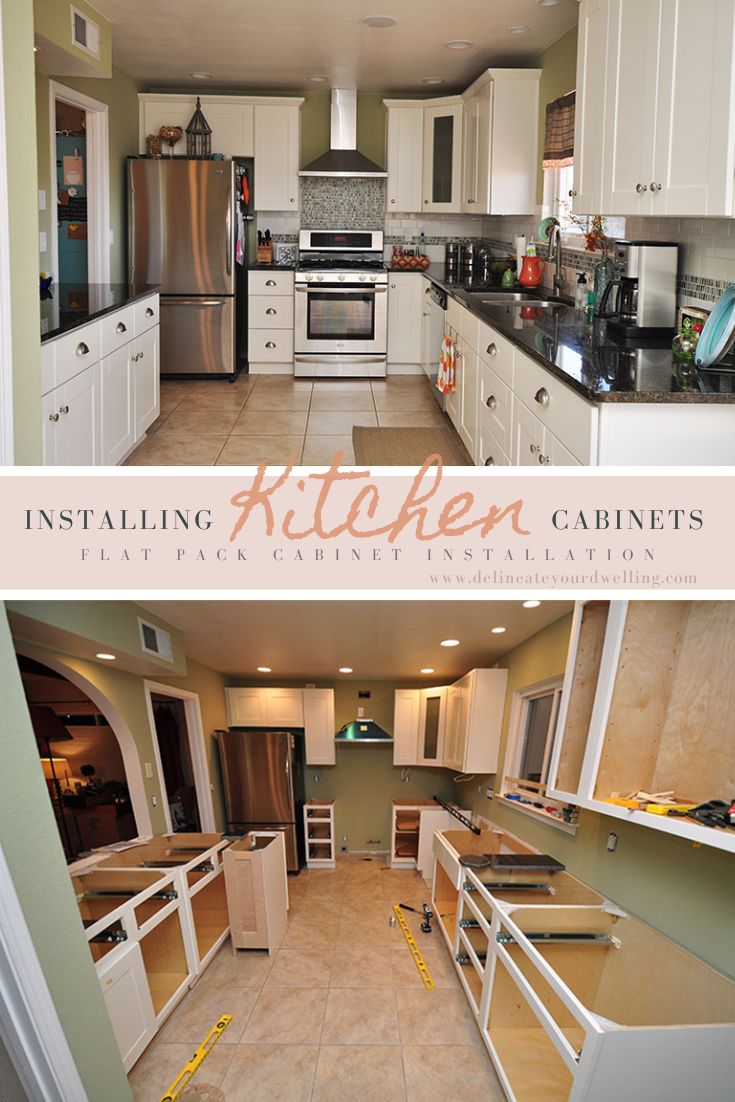
Credit: www.delineateyourdwelling.com
Step 5: Check Alignment and Level
As you install each cabinet, check for level and alignment. Cabinets should be flush and straight. Use a level often. Small gaps or unevenness can cause doors to not close properly.
Step 6: Remove Ledger Board and Final Touches
Once all wall cabinets are installed and secure, remove the ledger board. Attach any cabinet doors or drawer fronts if they were removed.
Adjust hinges and drawer slides for smooth operation. Clean the cabinets and the work area.
Tips for a Successful Installation
- Use Quality Screws: Use long cabinet screws, not drywall screws.
- Work with a Helper: Cabinets can be heavy and hard to hold alone.
- Take Your Time: Measure twice, drill once.
- Use Shims Wisely: Shims help level cabinets on uneven walls or floors.
- Check Studs Carefully: Missing the stud means weak cabinet support.
Common Problems and How to Fix Them
| Problem | Cause | Solution |
|---|---|---|
| Cabinets not level | Uneven floor or wall | Use shims under cabinets or behind backs |
| Cabinet doors don’t close properly | Misaligned cabinets or loose hinges | Adjust cabinet alignment and hinge screws |
| Cabinets feel loose | Not attached to wall studs securely | Use longer screws and attach to studs |
| Gaps between cabinets | Incorrect spacing or uneven walls | Use shims and tighten screws to pull cabinets together |
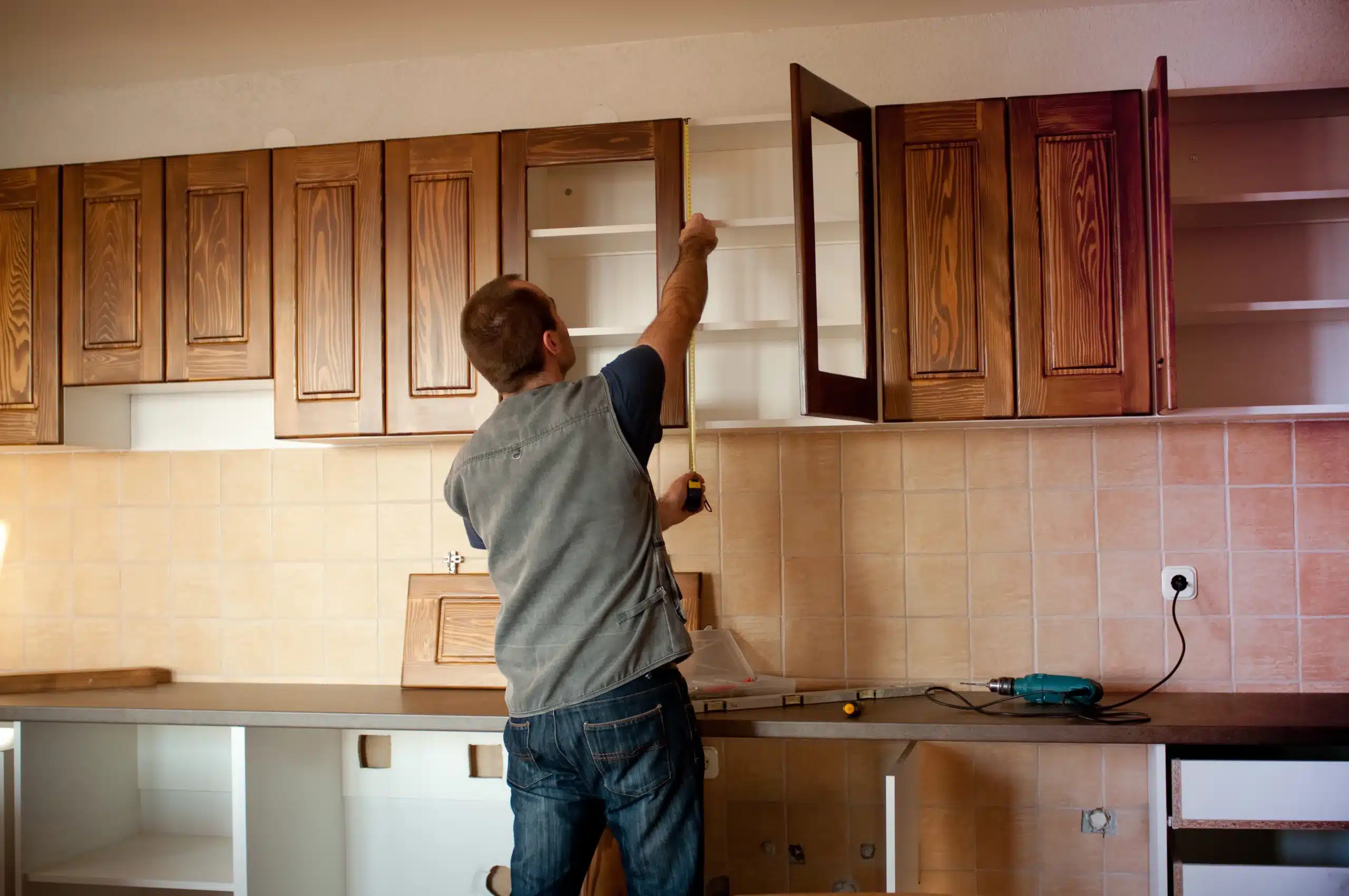
Credit: ootwc.com
Why Proper Installation Matters
Correct cabinet installation keeps your kitchen safe and beautiful. Cabinets hold heavy items. If they fall, it can cause injury or damage. Properly installed cabinets also last longer. They look better and work smoothly.
Summary
Installing kitchen cabinets takes care and patience. Follow these steps:
- Prepare the kitchen and tools.
- Find and mark wall studs.
- Install base cabinets first, level them, and screw into studs.
- Install wall cabinets, use a ledger board, level and screw into studs.
- Join cabinets together for strength.
- Check level and alignment often.
- Remove temporary supports and finish with doors and drawers.
With careful work, your kitchen cabinets will look great. They will hold your kitchen items safely. You can do it yourself or hire help. Either way, knowing how cabinets are installed is useful.
Frequently Asked Questions
How Are Kitchen Cabinets Attached?
Kitchen cabinets attach by screwing their backs and sides into wall studs or blocking. Shims level cabinets before tightening screws. Adjacent cabinets connect for stability. Hanging rails or blocking help where studs aren’t available. This ensures a secure, level, and durable kitchen cabinet installation.
Are Kitchen Cabinets Glued To The Wall?
Kitchen cabinets are not glued to the wall. Installers secure them by screwing through cabinet backs into wall studs for strong support. Shims level cabinets, and hanging rails or blocking may add extra stability. This method ensures cabinets stay firmly attached and properly aligned.
What’s The Average Labor Cost To Install Kitchen Cabinets?
The average labor cost to install kitchen cabinets ranges from $100 to $300 per linear foot. Prices vary by location and complexity. Skilled professionals ensure cabinets are leveled, secured to studs, and aligned properly. This investment guarantees durability and a polished kitchen appearance.
Can A Beginner Install Kitchen Cabinets?
Yes, beginners can install kitchen cabinets with proper tools, careful measuring, and following step-by-step guides. Patience ensures success.